Chlorophyll Profile For Mid-Latitudes
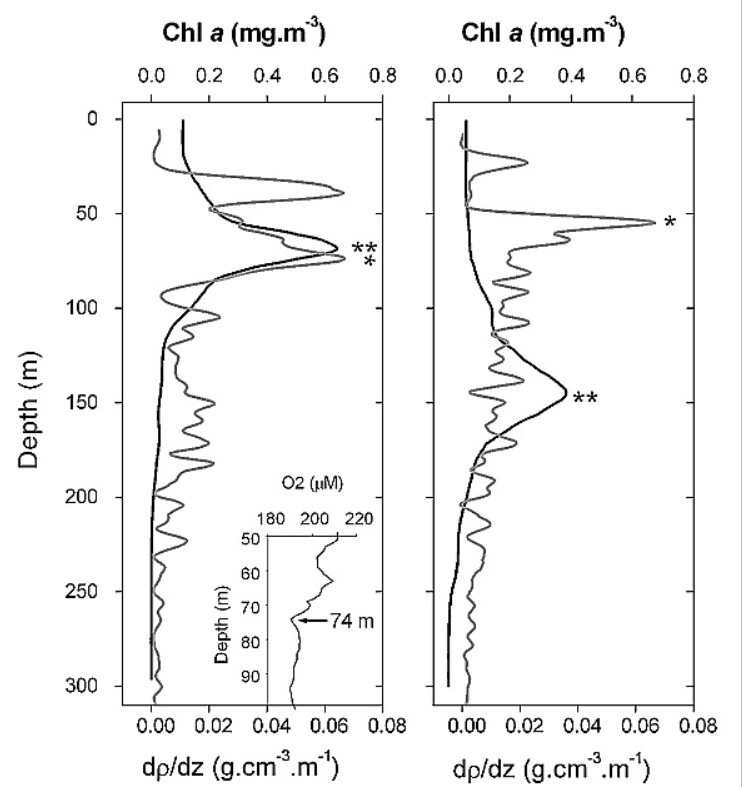
Chlorophyll a profiles from the Northeastern Carribean Sea. Small oxygen profile depicted in the first profile bottom right corner. Both profiles are from the same area, but recorded from two different marine stations (left) the Caribbean Time Series Stations CATS and the western tropical North Atlantic-WTNA station 1 (right).
Ever wonder what lurks in the water while you visit tropical resorts and beaches on vacation? People claim that the Caribbean waters are visually “cleaner” than the what we see in the North Atlantic, but is this true? The simple answer is no. Both regions have microorganisms and viruses that are present in the water column. If looks can deceive!
Oceanographical Differences Between the Atlantic and Caribbean
What we normally see in the East Coast of New England is high productivity during the spring and one small fall winter bloom. Due the seasonality, there is a deep thermocline and pycnocline layer allowing for mixing. In contrast, the Caribbean tropics there is less nutrients due to there being less of a pycnocline. However, productivity is typically high in coastal environments in the tropics because of intense sunlight and higher temperatures. The tropics tends to have higher productivity deeper in the water column because of increase UV radiation and less nutrients in the surface (Figure 1).
Viruses of the Caribbean
PaV1
The Caribbean is known for their large coral reef ecosystems. These provide hosts for many marine viruses. In fact, recently Panulirus argus virus 1 (PaV1 ) has been detected in the Caribbean spiny lobster larvae. The viral production of PaV1 was previously found to not be impacted by UV radiation which is how they can remain present in warm tropical waters. This virus is a double stranded DNA virus infects this host through ingestion of smaller prey during their larval phase called the phyllosoma phase. Symptoms of this viral infection in the host include discolored carapace and lethargy. The virus can also inhibit molting and cause fouling on the carapace. As a result, this pathogen can be lethal to juvenile larvae. Recent research is exploring how this virus spreads across the Caribbean whether it be from a post larval lobster being infectious and being transmitted though dispersal gateways that are found near currents. This is also how lobster larvae are distributed to different geographical habitats. Why is it important to track this viral transmission to spiny lobsters? There are three stocks of Caribbean spiny lobster in the Caribbean ranging from Puerto Rico to St. Croix and St. John. Monitoring the PaV1 virus can help protect fish stocks for fishing industries. Rates of infection can influence annual fisheries catch limit.
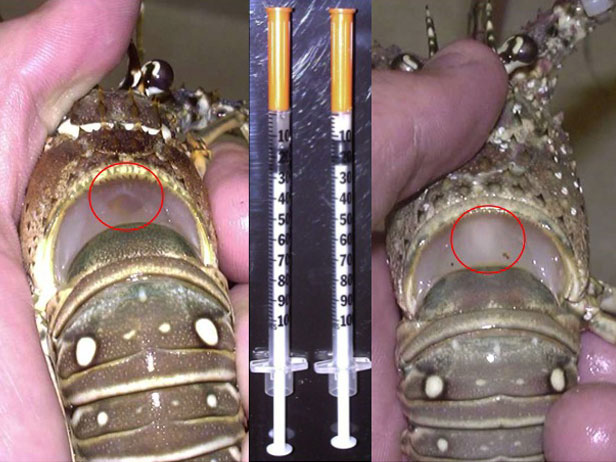
Healthy Lobster Vs. Infected Lobster With PAV1
Image adapted from Behringer Laboratory website. University of Florida. Left is the healthy tissue of the Caribbean Spiny Lobster and the right depicts infected tissue.
Other Viruses Impacting Marine Sponges
Sponges play an important role in protecting corals in reef ecosystems by protecting their skeletons from leaving the reef frame and nutrient cycling. When sponges are threatened this can impact survival of coral reef ecosystems in the Caribbean. Corals also play a important role in viral ecology because they have the ability to filter seawater and viral particles in the seawater through the oral ectoderm and mucus layer. It was discovered that relatives of Mimivirus have the ability to infect calcareous marine sponges. These viruses infect sponge phagocytes and can lead to cell death. These phagocytes are important for feeding and obtaining nutrients from the water column.
Viruses in Coral
The Caribbean coral reef experiences various white coral diseases. Currently, the worst one, stony coral tissue loss disease is impacting hard corals that are the foundation for coral reefs. 20 species of corals are impacted throughout the Caribbean. The virus that impacts these corals are lytic and causes tissue loss and necrosis of symbiotic algae that live on the coral. These are further spreading because of the increase of temperature in the ocean making corals more prone to viruses because of their loss of symbiotic algae because of tissue necrosis. It is unknown what specific bacteria causes this diseases, but scientists hypothesis that viruses like bacteriophages play an important role in regulating bacterial pathogens that may infect corals.
Conclusions
The viral composition in the Caribbean and how it directly impacts hosts within coral ecosystems continue to be studied. This field in particular is gaining more attention due to the loss of coral reef communities from climate change and disease. The video provided gives more insight on the specifics of stony coral tissue loss disease and what is being done to combat it. To save reefs and impact organisms that live in reefs as a nursery habitat, it is important to learn more about the relationships between disease and viral ecology in coral reef ecosystems in the tropics.