Viruses of Challenger Deep and Their Hosts (Zhou et al. 2022)
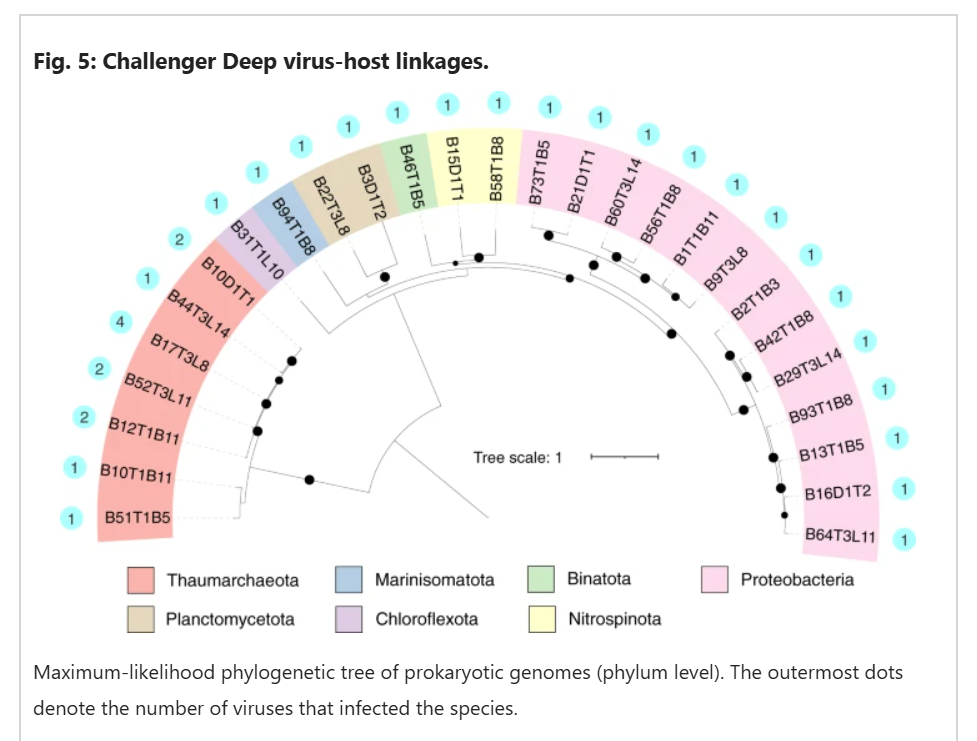
Figure 1. Viruses found from a metagenomic analyses from sediment sampled from Challenger Deep.
Hydrothermal vents have low oxygen environments and are a source of iron and manganese. Hydrothermal vents are located across oceanic ridges such as the Pacific. The water from the vents expelled from the vents have high levels of hydrogen sulfide and hydrogen gas that provide high amounts of energy for microbes. These vents are home to microbial communities that fixate carbon. Surface sediments have nitrite fixing bacteria. The organisms that survive in hydrothermal vent environments survive via chemosynthesis from bacteria in which lives in the tissue of the animal. The habitat is home to tubeworms, mussels, and crabs. These invertebrates have a diverse community of bacteria that colonizes there body. . These bacteria can protect crustacean larvae from fungi. The bacteria in hydrothermal vent environments are gammproteobacteria and epsilonproteobacteria. We currently understand the symbiotic relationship between hydrothermal vent bacteria and their hosts. Other invertebrates that utilize filter and suspension feeding can ingest viruses. Some have clearance rates of over 90% of viral particles in a day. Even larvae of these organisms consume viral particles. Does this influence viral composition in the hadal zone in the deep sea?
The deep sea benthic community is home to many unique species of invertebrates, however there is a limited understanding about trench biodiversity and the presence of viruses to these hosts. These organisms that live in hadal trenches are adapted to cold water temperatures that range from 0.1-2.5 degrees Celsius. Current research about the relationships between hosts and virus community in the hadal zone discusses a high abundance of microorganisms in trench regions. Trench sediments in recent studies have been sampled and are found to have the highest community composition of microbes from the phylum Firmicutes and Proteobacteria (Figure 2). These microbes when lysed by viruses in hadal sediment released more carbon compared to virus lysis in abyssal regions. Therefore, understanding viral composition in sediment throughout the hadal zone is important to understanding carbon cycling. With this expected high abundance of microbial hosts in the trench one can presume that many viruses have been identified. Many studies of hadal zone virus ecology still remains unknown.
Prior to 2021, only one virus clade has been isolated from sediment samples from the hadal zone. This virus was identified as PstS-1 in bacterium Pseudomonas stutzeri. Now, research has found what specific bacteria are hosts of viruses from the hadal zone which include Gammaproteobacteria and Thaumarchaeota. Lysogenic viruses were found to dominate water samples from the hadal zone and is inferred to be more favorable to microbes here in contrast to those found in the upper water column. Viruses in the hadal habitat provide degradable carbon for the system for the microbes in the sediment.
In a metagenomic study, sediments from Challenger Deep were sampled and the metagenomes of the microbes were sequenced (Figure 1). 77% of the viral genra found from the sampled sediment cores were distinct from viral clusters found in the global ocean virome, in other words the viruses found in Challenger Deep is endemic strictly to that habitat. In contrast to the sediment sampled from the upper water column in the Mariana Trench, these viruses were not identified as lytic or lysogenic, but the authors infer that only 5% of viruses of Challenger Deep will have a lysogenic effects. More specifically, the new viruses identified include those that infect the chemoautotroph Thaumarchaeota which are usually infected by lytic viruses.
More recently, a new virus has been found in the hadal zone from surface sediment from the Mariana Trench, this virus is known to impact the bacterium host Halomonas. This bacteria is found in the sediment within Marianas Trench and can be used to break down hydrocarbons. The virus that infects this host is siphovirus vB_HmeY_H4907. This virus was found to be lysogenic. As pointed out in previous studies, there is a viral community present below the hadal zone in the Pacific, but further research needs to be produced to better understand the viruses recently discovered and their specific interactions with the bacterial community in various depths. Understanding these viruses can help understand the relationships between virus-bacteria and invertebrates that inhabit the hadal zone and how these ecologically play a role in nutrient cycling in the deep ocean. Do invertebrates that live in Mariana’s Trench play a role in the virus composition of sediment from ingestion of particles from marine snow? These are questions that should be further inquired when considering what viruses we may find in the deep sea.
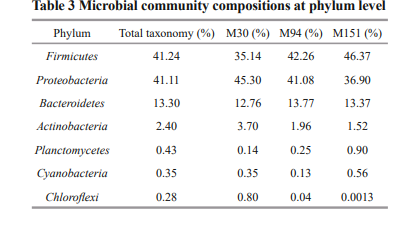
Results of Microbial Community Identification from Sampled Sediment From The Mariana Trench (Li et al., 2019).
Figure 1. Sediment taken from the south of Mariana Trench. These were identified by depths pf from 30cm, 94 cm, and 151 cm from a 2 meter long sediment core sampled from below the seafloor. M30, M94, M151, as labels for these samples. The phylum of microbial communities most abundant from the sediment samples is provided.