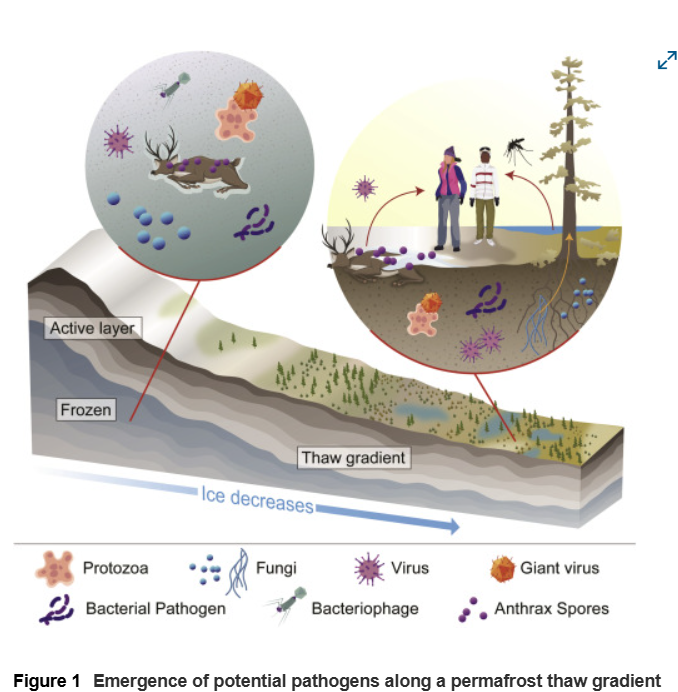
Figure 1. Diagram of predicted viral-host interactions as a result of melting permafrost. Derived from Wu et al. 2022.
Climate change is predicted to increase global temperatures from 1.4- 5.8 degrees Celsius. The melting glaciers raises concerns of a high concentration of freshwater input into the global oceans that may disrupt the global conveyor belt-responsible for deep sea mixing. Along with that viruses from freshwater deposits are also moving to arctic waters. Pertaining to the permafrost, permafrost in Canada, Sweden, and Alaska are degrading. Permafrost is found to cover up to 24% of the northern hemisphere. Researchers predict large permafrost reduction within the surface layer of 1 to 3 meters. Permafrost is a source for organic carbon which is used in nutrient cycling in sediments and is in dissolved organic carbon used in the marine microbial cycle. Along with organic carbon-there is one other contents deep within the permafrost-and that will be ancient viruses.
Melting permafrost such as that shown in Siberia risks the potential for microbes in the deep permafrost layers to be metabolically reactivated because of exposure to liquid water. This also becomes a climate issue when the permafrost melts and releases carbon dioxide into the atmosphere. It is predicted that between 22 -64% of permafrost in the northern hemisphere will thaw by 2100. The permafrost layers has been previously discovered to contain viruses such as smallpox. In a 2023 study, viruses from the Pandoraviridae family sampled from Siberian permafrost can infect the bacterial host Acanthamoeba. Some may ask if there are limited viral families found in permafrost, but this is not the case. Viruses found via metatranscriptomics within permafrost samples include: Poxviridae, Asfarviridae, Phycodaviridae, Mimiviridae, Pimascovirales and bacteriophages.
Viruses have also been found in high elevation permafrost geographical ranges such as in the Tibetan Plateau. A study has found that virus diversity increases with the thickness of the permafrost. If we were to see a drastic increase of temperature increase these permafrost layers could melt exposing hosts to these viruses. Inside the permafrost these viruses also compete against each other. Bacteriophages within the permafrost in the Tibetan Plateau show dynamics that are a part of the “Kill the Winner Hypothesis” . Viruses such as Myoviridae and Siphoviridae were found to be present in this permafrost and compete for hosts. Concerns from scientists studying the viral composition of the permafrost was if these viral families have the potential to impact fish in local rivers when the permafrost melts. This is from these pathogens impacting food sources for these fish. Locally, this would impact small scale fisheries that rely on these fish for food and recreational purposes. The question that still remains is will these viruses be infectious when released into the freshwater habitat or do they only depend on the bacterial hosts that are within permafrost soil?
Scientists are concerned that host exposure to these “ancient” pathogens can cause widespread infection that will spread throughout the marine food web and potentially to humans (Figure 1). This is a concern because of the human interactions with potential hosts in marine ecosystems such as fish and seabirds (this is possible if these viruses contain the proper machinery to infect eukaryotic hosts). Another concern is of “spill over” of viruses from the permafrost to microbial hosts. Though, these risks to humans remain low it is important to consider the widespread outlook of what these viruses have the potential do based on what we currently know about viral ecology now.
The permafrost soils also contain bacterial hosts such as cyanobacteria. If cyanobacteria from the permafrost enters the marine ecosystem this may impact boom and bust scenarios in the marine ecosystem during phytoplankton blooms. Are these cyanobacteria in permafrost potentially cause HABs because they are from freshwater sources? Would the viruses already in our marine ecosystem be able to control the newly released cyanobacteria from permafrost in the future? Another concern is how these viruses released from the permafrost will impact the marine bacterial loop. If new families of viruses are exposed to the marine environment from runoff from melting permafrost what would happen to the presence of bacteria that are responsible for recycling carbon throughout the marine food chain? These questions still remain unanswered, but these are questions that remain important to consider when understanding the ecological impacts of melting permafrost.